Quick answer:
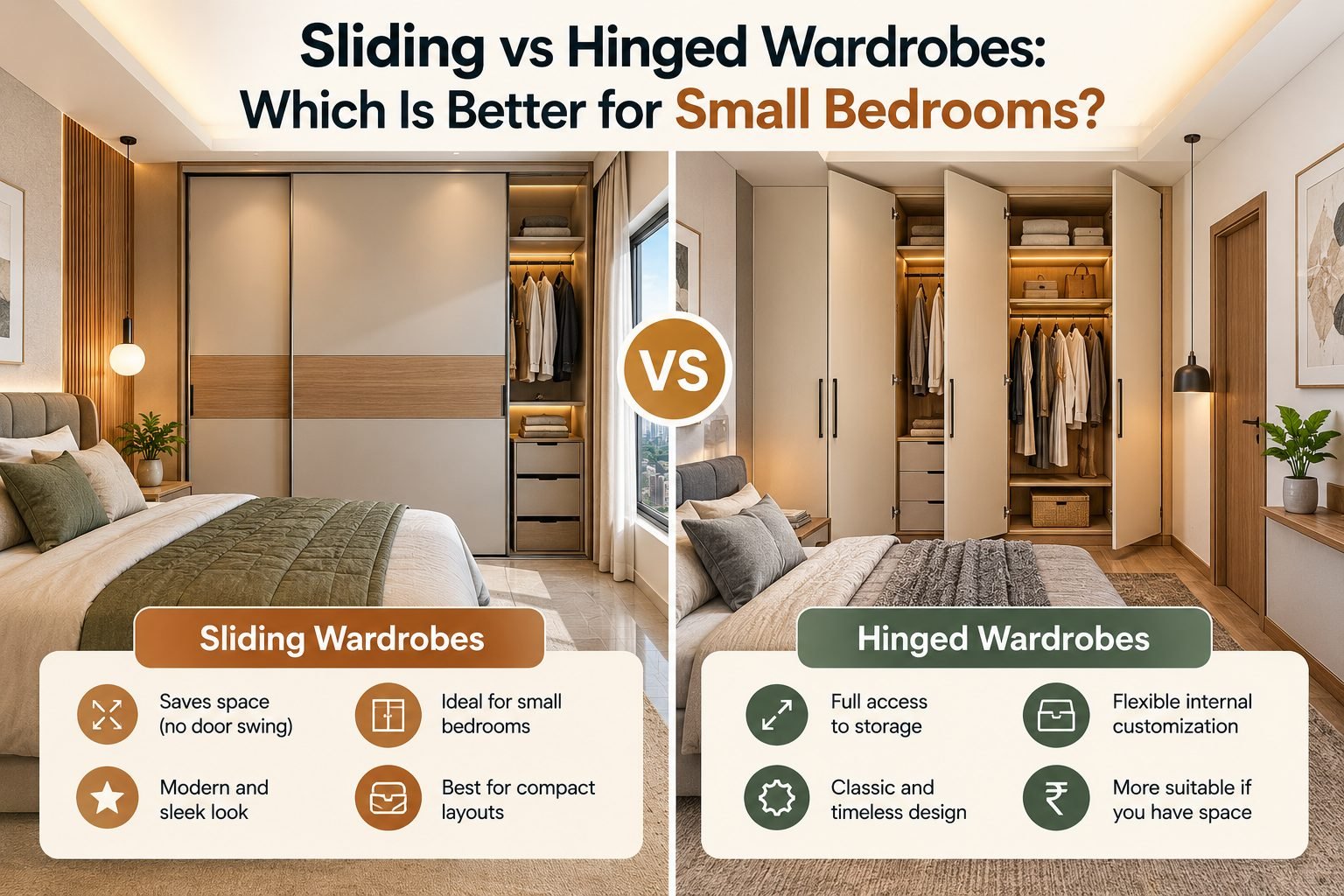
Pick sliding if your bed or side table sits within about 2 ft of the wardrobe wall. Sliding doors need no front clearance.
Pick hinged if you have at least 600 mm of clear floor in front and want to see the whole interior at once.
Budget: For a 6 ft unit, sliding costs about ₹5,000 to ₹20,000 more than hinged at entry and mid-range tiers, based on Spacewood’s published prices.
Sliding vs Hinged Wardrobe at a Glance
Both the clearance figures and the prices come from Spacewood, a large Indian wardrobe maker. Treat the prices as one manufacturer’s guide, and compare them against local quotes.
How Much Floor Space Each Door Type Uses
Spacewood says front clearance in many Indian bedrooms runs only 3 to 4 ft. A hinged wardrobe needs clear floor at least equal to its shutter width. Standard shutters run 450 to 600 mm wide, and Spacewood calls 600 mm the minimum for comfortable use. A sliding wardrobe needs none, and Spacewood says a bed can sit as close as 18 to 24 inches away.
Here is a worked example. Take a room 10 ft wide, wall to wall. A wardrobe at the standard 600 mm depth (about 2 ft) leaves 8 ft. A hinged unit adds a 2 ft swing zone where nothing can stand, so only 6 ft stays usable. A sliding unit keeps all 8 ft. That is a 2 ft gain, or 25% more usable width. This is my own arithmetic, so measure your room before you decide.
One more check: drawers inside the wardrobe also pull out into the room. Leave room for them with either door type.
Sliding Wardrobe Design: What to Check Before You Buy
A sliding wardrobe solves one problem very well. It gives you full storage without asking the bedroom to make room for swinging doors. Spacewood calls sliding the most common format in Indian urban homes for exactly that reason.
RSpace’s wardrobe page lists a Floor-to-Ceiling Sliding Wardrobe as one example. It is a full-height, three-door unit with a tinted glass profile shutter, internal LED motion-sensor lights, and dedicated trouser racks, listed at ₹1.1 lakh to ₹1.9 lakh for a 3 BHK home.
Check the track before the finish
The track decides whether the doors still glide in year five. Here is what to ask:
Top-hung or bottom-roll? Spacewood says top-hung systems last longer in most Indian homes, because the bottom track only guides the panel and collects less debris.
Soft-close dampers? A damper slows the panel in the last few inches, so it never hits the frame.
How many panels? Spacewood suggests two doors up to 6 ft wide and three doors beyond that. Narrower panels are lighter and slide more smoothly.
What depth? Keep it at 600 mm. A 500 mm depth or less forces clothes to sit at an angle, per Spacewood.
The honest downsides
One section at a time. An open panel blocks the other half. Plan the interior so daily clothes sit in one section.
No easy conversion. Spacewood says you usually cannot convert a hinged wardrobe to sliding without major rework, because the frame needs track infrastructure from the start.
Cheap tracks fail. Spacewood warns that budget tracks derail, wobble, and clog within months.
Hinged Wardrobes: When They Still Win
Sliding is not always the right call. Hinged wardrobes make sense when your room has space and your household shares storage.
Full access. Both shutters open at once, so you see every shelf and rod. Spacewood notes this helps when two people reach into different sections together.
Fewer moving parts. Hinges replace tracks. But cheap hinges fail within two to three years, per Spacewood, so hinge quality matters.
More design variety. The full shutter face stays visible, so panelled, handle-less, and mirror-inset looks all work.
Narrower shutters help. Three or four narrow shutters need less clearance each and stay aligned longer than two oversized ones.
If your clear floor falls under 600 mm, a hinged unit will clash with the bed or side table. Go sliding in that case.
Wardrobe Designs for Small Bedroom: 6 Practical Tips
Whichever door type you choose, these moves make a compact room feel bigger and work harder.
Go full height with a loft. Spacewood suggests planning a loft section for luggage, quilts, and spare bedding instead of piling them on top.
Add a mirror panel. A full-length mirror on one shutter replaces a standalone mirror. Spacewood says mirror panels also make a room look larger.
Plan the inside first. Mix full-height hanging for long garments, half-height hanging for shirts, and drawers at the base. Choose adjustable shelves, because storage needs change.
Hold the depth at 600 mm. Go shallower and you lose usable hanging space.
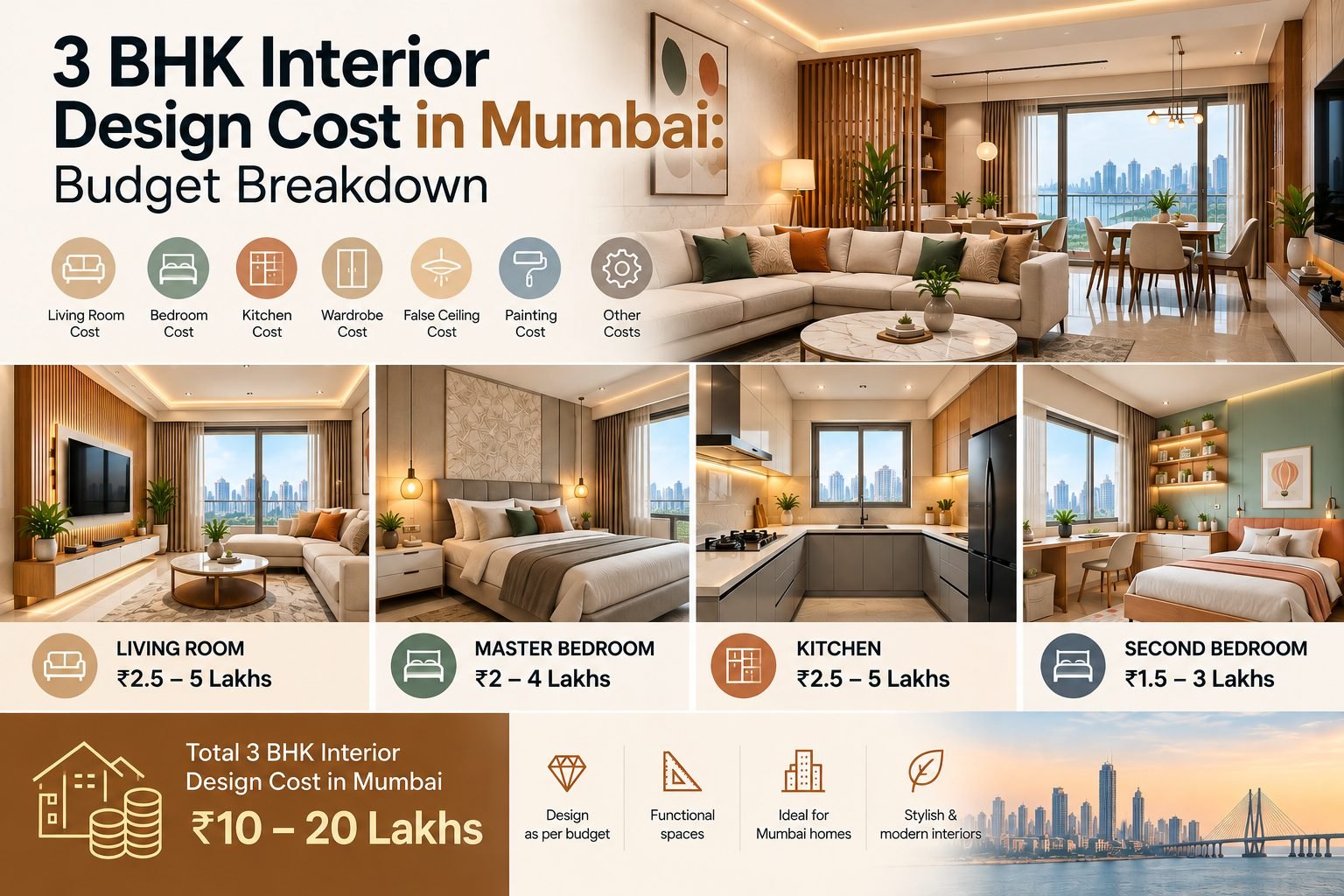
Look up. RSpace’s bedroom designs include a Compact Urban Bedroom, built for 2BHK Mumbai apartments, with wall-mounted storage overhead and a space-saving bed. It is listed at ₹95,000 to ₹1.6 lakh.
Choose handles with care. Spacewood says push-to-open works on lightly loaded shutters, while heavier shutters stay more reliable with handles.
Sliding vs Hinged Wardrobe Cost
Spacewood publishes three price tiers for a 6 ft unit:
The gap is small at entry level and grows as you add mirrors, glass, and better track hardware. Housiey’s 2026 guide shows a wider split by area. It lists laminate wardrobes at ₹1,000 to ₹1,500 per sq ft and sliding wardrobes at ₹2,500 to ₹3,500. A 6 ft by 7 ft unit has 42 sq ft of front area, so that works out to roughly ₹42,000 to ₹63,000 for laminate and ₹1.05 lakh to ₹1.47 lakh for sliding. The two sources measure scope differently, so compare quotes that name the same finish, track, and interior.
Spacewood’s advice on tracks is worth repeating. A slightly cheaper track that wears out in three years costs more in service calls than you save at purchase.
Materials That Matter in Mumbai’s Humidity
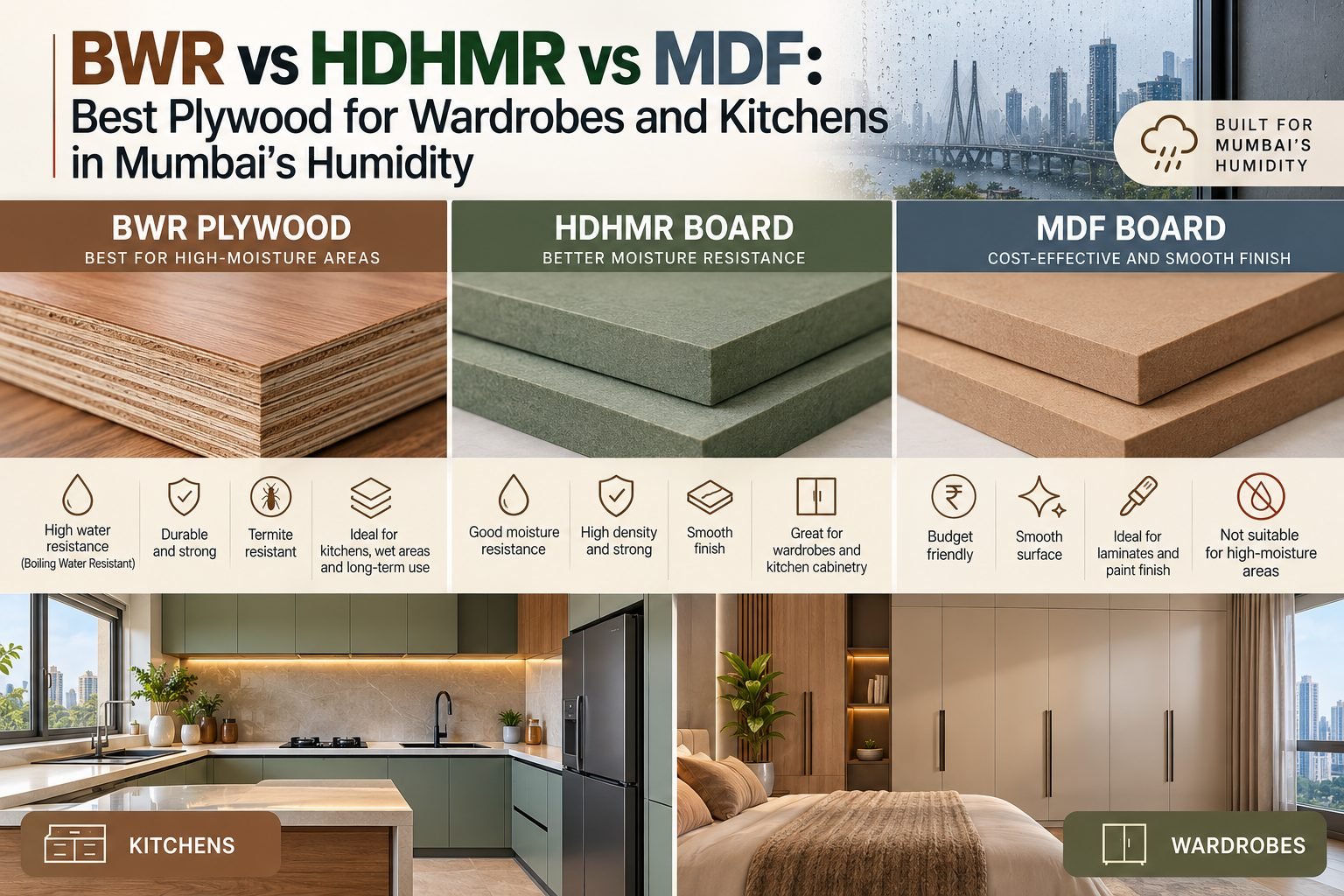
Mumbai’s air stays wet for months. India Meteorological Department normals for 1991 to 2020 show average evening humidity of 85% in July at Colaba and 81% at Santacruz. A warped panel drags on a sliding track, and Spacewood points to moisture-resistant plywood with proper edge banding as the fix, especially in coastal cities.
Greenply’s July 2026 wardrobe guide suggests at least 19 mm plywood for frames and shelves, and 18 mm for shutters. Ask your vendor to name the board, thickness, and edge treatment in writing.
How to Decide in 5 Steps
Measure the clear floor in front of the wardrobe wall, with the bed and side tables in place.
Compare it to 600 mm. Under that, shortlist sliding.
Check the width. Over 6 ft, plan three sliding panels or three to four hinged shutters.
Count the users. If two people reach into the wardrobe together, weigh hinged more heavily.
Set your hardware budget first. Fix the track or hinge quality, then pick the finish.
Next Steps
You now have a simple test: measure, compare to 600 mm, then match the door type to the room. If you want to see finishes and layouts side by side, browse RSpace’s wardrobe design ideas and bring your measurements to the designer. The best wardrobe designs for small bedroom layouts start with floor space, not with colour.
FAQs
Is a sliding wardrobe better than a hinged one for a small bedroom?
Usually yes. A sliding wardrobe design needs no front clearance, so the bed can sit close to the wall. Hinged units need clear floor at least equal to shutter width. Choose hinged only if you have the space.
How much space does a hinged wardrobe need in front?
Spacewood says clearance should at least equal the shutter width. Standard shutters run 450 to 600 mm wide, and 600 mm is the minimum for comfortable use. Narrower shutters need less clearance, so wider units use three or four.
Do sliding wardrobes cost more than hinged ones?
Usually a little more. Spacewood lists a 6 ft sliding unit at ₹35,000 to ₹60,000 at entry level, against ₹30,000 to ₹55,000 for hinged. Mirrors, glass, and better tracks widen the gap at higher tiers.
How wide can a 2-door sliding wardrobe be?
Spacewood recommends two doors up to about 6 ft wide. Beyond that, use three or four panels. Narrower panels are lighter, slide more smoothly, and put less stress on the track over time.
Can I convert a hinged wardrobe to sliding later?
Usually not without major rework. Spacewood says sliding wardrobes need track infrastructure built into the frame from the start, and panel sizes differ. Decide on the door type before production begins.